
Tarboro’s older neighborhoods around St. Andrew Street, Main Street, and the Town Common bring together historic houses, mid-century homes, and working properties with generous yards and a mature tree canopy. Tight property lines, aging utility infrastructure, and steady moisture from the Tar River basin make tree care more complex here than in many nearby areas. The network of tree care professionals in Greenville knows how to handle overhead utility conflicts, manage roots pressing into older foundations, and evaluate storm-damaged limbs on properties that remain exposed to flooding and strong winds.
That is why more Tarboro, NC property owners rely on Arbor Tree Care to keep their landscapes in good shape throughout the year.

Prefer to Talk to An Expert?
(252) 303-2403
Why Tarboro Property Owners Trust Local Professionals to Get It Right
Because they work in this area every day, these professionals understand the mature hardwood canopy, saturated soils, and narrow historic streetscapes that define Tarboro. Every job is completed with equipment and methods suited to local conditions, including post-storm debris cleanup, unstable root zones, and the fungal pressure that often affects trees in this part of Edgecombe County.
From expert stump removal solutions near the Town Common historic district to structural pruning along the established oak corridors on St. Andrew Street, each project is completed with careful attention to safety and long-term tree health.
If you care about your property, work with local contractors who can help keep your landscape healthy, stable, and safe in Tarboro.
Our Tree-Service Services
in Greenville, NC, Include
A Service Area Designed to Fit Your Tarboro Neighborhood
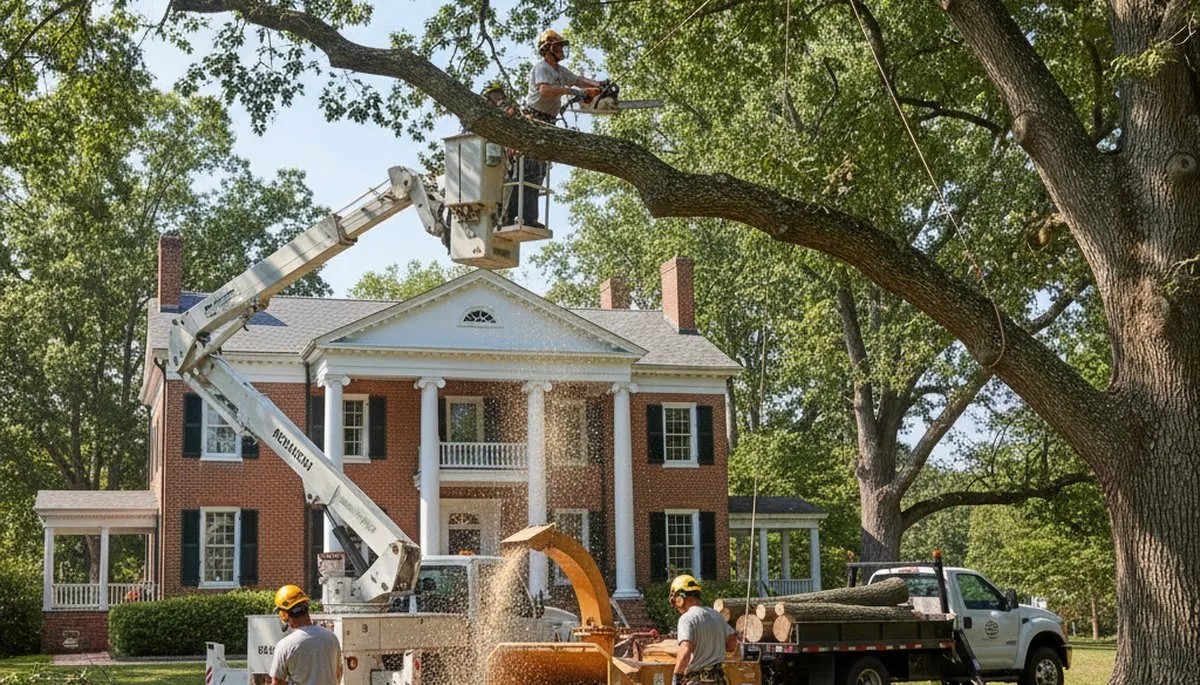
Tarboro’s older neighborhoods have mature trees and limited access that call for tree services tailored to each property, not a generic approach. Local professionals adapt their work to everything from compact historic lots to larger parcels near the river.
Whether it is a colonial-style home in the Tarboro Town Common Historic District, a mid-century ranch in the Hendricks Avenue corridor, or a rural lot close to the Tar River floodplain, the work is planned around the site.
From professional tree pruning services and tree removal to stump grinding and emergency storm response, services are matched to the neighborhood’s character and each property’s specific needs.
Tarboro’s Aging Urban Forest, Rooted in History
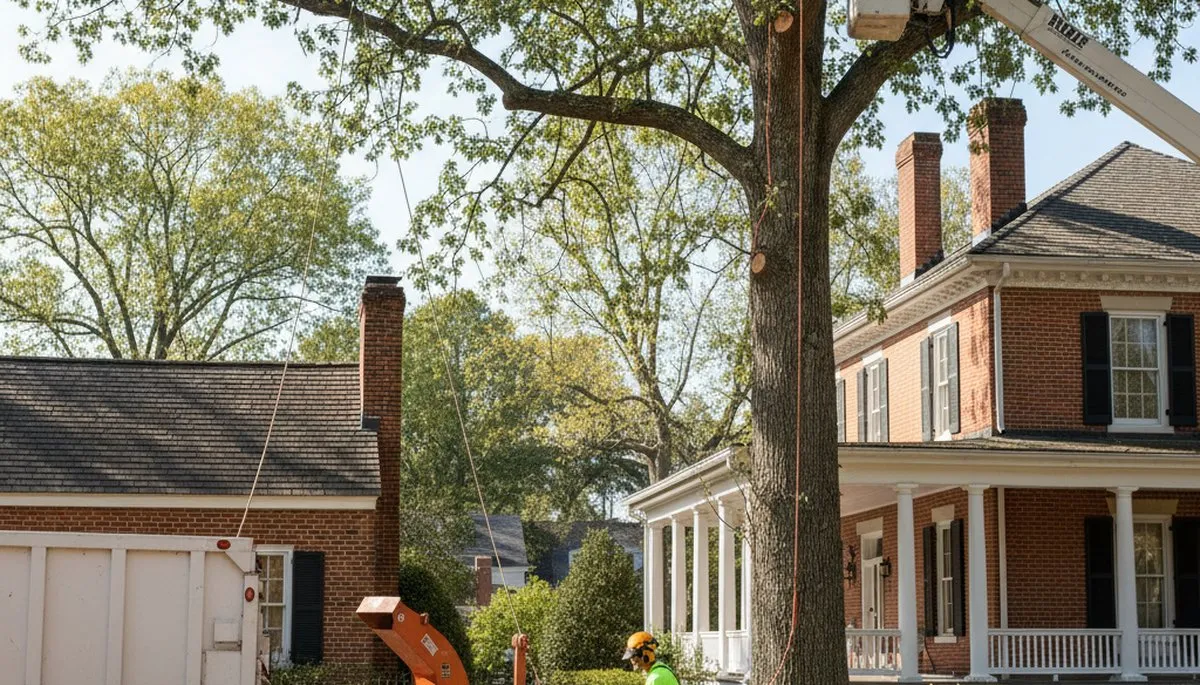
Tarboro is one of North Carolina’s oldest incorporated towns, and its tree canopy reflects generations of growth along the Tar River corridor. That long history also means many properties now have oversized root systems, weakened hardwoods, and flood-damaged trees that require a careful, site-specific approach.
Mature Hardwood Root Encroachment on Historic Foundations
In many parts of Tarboro, especially the Town Common Historic District and Main Street, century-old oaks and elms have roots that extend beneath sidewalks, driveways, and slab foundations. The result can be lifted pavement, foundation stress, and access challenges that raise both safety and maintenance concerns for homeowners.
Local professionals address root encroachment with targeted root barriers, precise pruning of surface roots, and selective canopy reduction to help limit long-term damage without compromising the tree’s stability.
Storm-Weakened Canopy Along Tar River Corridor Properties
The Tar River adds beauty and shade, but properties near the corridor also face repeated storm exposure and saturated soil that can weaken large canopy trees. Co-dominant stems and stressed root zones can increase the chance of sudden limb drop or full tree failure during high winds.
Professionals respond with cabling and bracing evaluations, focused crown thinning, and hazard limb removal, all adjusted for moisture-stressed root conditions common near the river.
Fungal Disease and Moisture-Driven Decay in Low-Lying Lots
Frequent flooding and high humidity have made it harder for many Tarboro trees to resist fungal pathogens and internal decay, especially in low-lying areas near the Tar River basin and Hendricks Creek drainage zones.
Trusted crews support these properties with early disease detection, targeted fungicide treatment, and selective removal of compromised wood to improve canopy health and reduce fall risk on flood-adjacent lots.
Hurricane and Tropical Storm Debris Management
Because Eastern North Carolina sits in the path of Atlantic storm systems, Tarboro often sees heavy rain, strong wind, and broken limbs that leave debris piled across yards, driveways, and historic streets.
Experienced crews clear storm debris with aerial lift equipment, hand-rigging, and coordinated ground support so properties can regain safe access even when several trees on neighboring lots need attention at once.
Constrained Equipment Access in Narrow Historic Streetscapes
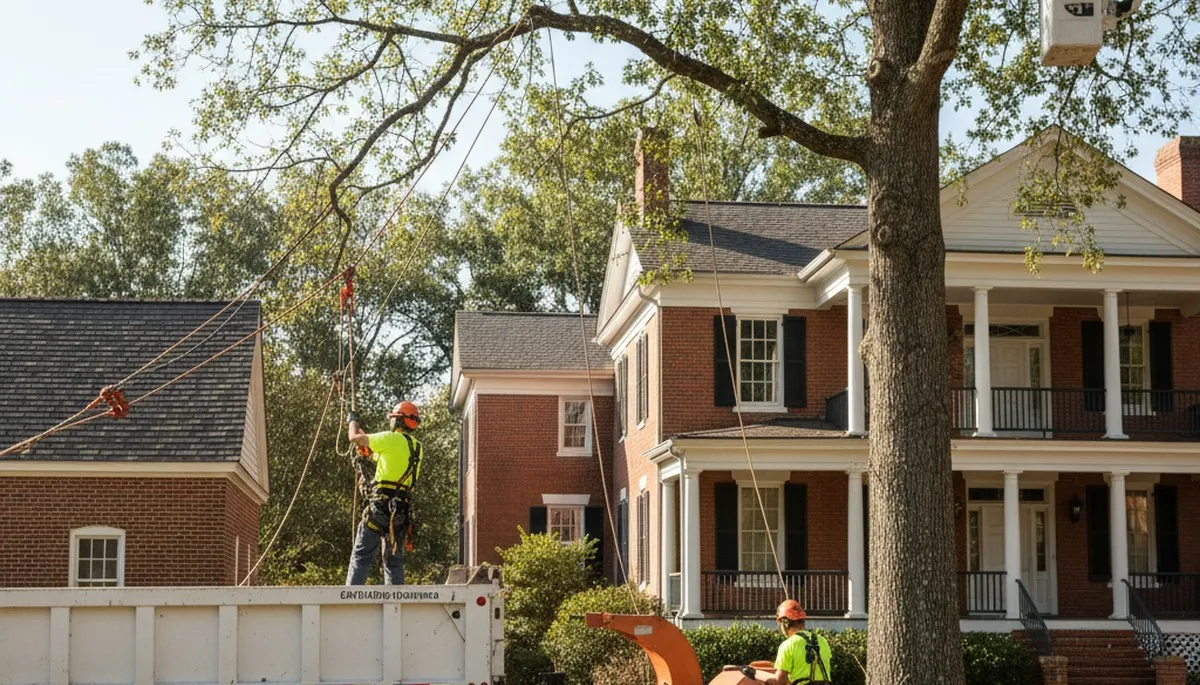
Many homes in Tarboro’s historic core sit on tight lots with narrow access points, which makes large equipment harder to use without risking damage to fences, utility lines, or nearby structures.
Local pros rely on compact aerial lifts and hand-climb rigging, with a focus on protecting the property and containing debris, so tree work can be completed even where rear-yard equipment access is limited.

Get your Tree Service project underway today!

Tree Services in Tarboro, NC: Care for Every Season
From regular pruning to urgent storm cleanup, here is how local pros help keep Tarboro properties healthy, balanced, and ready for changing weather all year long:
Routine Tree Trimming and Pruning in Tarboro, NC
- Seasonal Crown Thinning on Mature Oaks: Reducing canopy density on the large water oaks along St. Andrew Street can improve wind resistance and lower the risk of limb failure when storms move in.
- Clearance Trimming Near Utility Lines: Homes along Granville Street and the Main Street corridor often need overhead clearance work to keep branches away from power and communication lines.
- Structural Pruning on Young Replacement Trees: Newly planted street trees in the Town Common Historic District benefit from early structural pruning so they can develop strong branch architecture before weight becomes an issue.
- Deadwood Removal on Flood-Stressed Hardwoods: Trees in low-lying areas near the Tar River floodplain often develop deadwood after root saturation, so regular removal helps reduce the chance of falling limbs.
- Shrub Line and Understory Management: Thick understory growth along fence lines and property borders across Tarboro’s older residential blocks benefits from periodic trimming to maintain visibility and reduce pest habitat. Property owners in nearby communities can also find support through tree trimming services in Pinetops, NC.
Plan trimming before storm season so Tarboro’s mature canopy stays easier to manage and structurally sound throughout the year.
Tree Removal Services in Tarboro, NC
- Hazardous Tree Removal Near Historic Structures: Trees that lean or show structural weakness near the Town Common Historic District often need careful sectional removal to protect masonry, fences, and nearby improvements.
- Storm-Damaged Tree Removal After Tropical Events: After hurricane-season weather, downed or partially uprooted trees across Tarboro’s streets need quick removal to reopen access and reduce added hazards.
- Dead Tree Removal on Flood-Adjacent Lots: Trees killed by prolonged root saturation near the Tar River corridor should be removed before decay progresses and safe felling becomes more difficult.
- Tight-Access Removal in Historic Rear Yards: Narrow alley access behind Main Street properties often requires hand-climb removal methods and compact equipment to remove large trees without damaging surrounding structures.
- Competing Tree Removal for Canopy Restoration: Removing overcrowded or suppressed trees in dense residential yards throughout Tarboro gives remaining trees better room to develop healthier canopies and root systems.
Prompt tree removal helps protect Tarboro’s historic infrastructure, clears storm damage, and makes room for stronger long-term canopy growth.
Stump Grinding and Cleanup in Tarboro, NC
- Historic District Stump Removal: Stumps left after tree removal near the Town Common area require careful grinding so nearby brick walkways, neighboring root systems, and shallow utility lines are not disturbed.
- Flood-Zone Stump Clearance: In low-lying parts of the Tar River area, decaying stumps can attract insects and fungal growth that spread to nearby trees, making prompt grinding important.
- Driveway and Sidewalk Stump Elimination: Stumps along Granville Street and local side streets can create trip hazards and block driveway use, so full grinding and cleanup are often needed.
- Post-Removal Lot Preparation: After large tree removal on working residential lots throughout Tarboro, stump grinding and surface root clearing prepare the area for replanting, sod, or hardscape work.
- Multi-Stump Clearance on Larger Properties: Rural and semi-rural lots on Tarboro’s eastern edge near county roads often contain several old stumps from earlier land clearing, which calls for systematic grinding over wider areas. Residents in the broader region can also explore stump grinding in Robersonville, NC for comparable support.
Complete stump removal removes decay sources, opens usable yard space, and gets rid of insect harborage that can affect nearby trees on Tarboro properties.
Emergency Tree Services in Tarboro, NC
- Post-Storm Fallen Tree Response: When tropical systems or severe thunderstorms push trees onto driveways, rooftops, or roadways in Tarboro, fast-response crews clear access and assess damage without delay.
- 24-Hour Hazard Limb Removal: Large hanging limbs or partially attached branches after wind events in the Town Common area and Hendricks Avenue corridor need immediate removal to protect people and vehicles below.
- Flood-Weakened Tree Assessment and Emergency Removal: After Tar River flooding, trees with compromised root zones and a serious fall risk need urgent evaluation and, when necessary, emergency extraction before conditions worsen.
- Storm Debris Clearing from Driveways and Access Routes: Quick removal of branches and debris from residential driveways and shared access lanes throughout Tarboro helps restore movement for residents and emergency vehicles.
- Emergency Root Zone Stabilization After Soil Saturation: When soaked soils cause visible lean or root heave in large canopy trees near occupied structures, emergency stabilization and hazard assessment help protect both people and property until removal or bracing can be completed.
Fast emergency response in Tarboro reduces secondary damage, restores safe access, and handles urgent tree hazards before they turn into larger safety or structural problems.